Universal Mother (Eve)
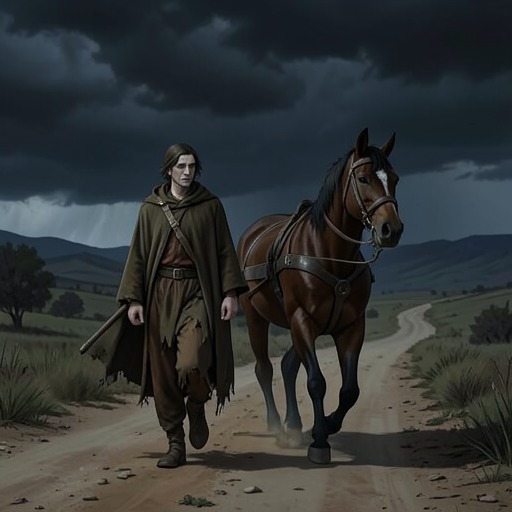
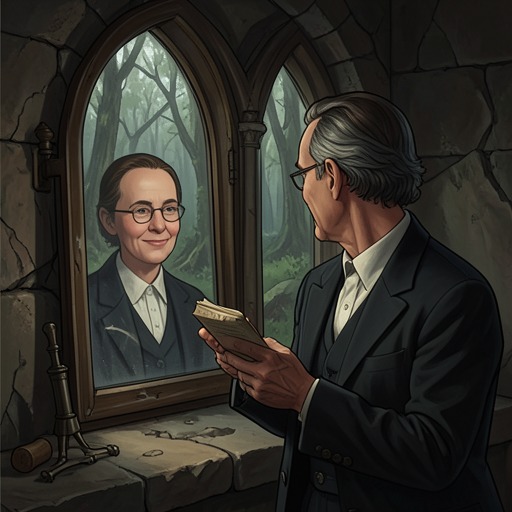
Narcissus and GoldmundThe Universal Mother (Eve) is the inward image Goldmund follows as both a summons and an artistic possibility: not a portrait of one woman, but a figure in which life’s opposing forces coexist. Formed from the memory of his mother and continually altered by love, danger, and loss, she becomes at once mother, source of desire, and figure of death. Goldmund cannot define her appearance with certainty, but he recognizes her as the central mystery he hopes to make visible.
From Personal Memory to Maternal Archetype
The image begins in Goldmund’s recollection of his own mother, which Narcissus had helped him recover. As Goldmund wanders, the remembered face changes: its particular features and colors give way to an impersonal maternal image, which he associates with Eve and the mother of humankind. The transformation does not erase the original memory. Goldmund imagines it as enclosed within the larger image, like a cherry pit within its fruit.
Other women contribute to the image without becoming its final subject. Lise, a gypsy woman, Lydia, and many others leave traces in the face Goldmund carries inwardly; each encounter and new experience modifies it. The envisioned figure is therefore not meant to represent any one woman. It is the source of life as Goldmund apprehends it through accumulated memory and desire. He repeatedly thinks he sees the image, and at times it appears in dreams, yet he cannot give a settled account of its features.
The maternal image also emerges through an encounter with birth. Goldmund recalls seeing it come alive within him one winter night when he was asked to hold a light for a peasant woman in labor. This experience gives the image a concrete point of revelation, while leaving its essential meaning resistant to definition. His own mother’s face remains its origin, but the figure grows beyond personal remembrance into a vision of the mother of life.
A Figure of Opposites
Goldmund’s Eve joins forces that ordinarily remain apart. He wants her to embody birth and death, tenderness and cruelty, life and destruction, and the intimate relation of ecstasy to pain and death. The image is not beautiful because of a particular feature, degree of delicacy, or expression of strength. Its mystery lies in the fusion of contrasts that seem irreconcilable everywhere else.
This maternal conception shapes Goldmund’s understanding of desire and mortality. Ecstasy already bears the certainty of its passing; melancholy, in turn, can be overcome by renewed desire. To Goldmund, the mother of life may therefore be named love or desire, but also death, grave, or decay. Eve gives birth continually and continually takes life away; love and cruelty are inseparable in her. As he carries the image, it becomes a parable and sacred symbol rather than merely a private memory.
The image also distinguishes Goldmund’s way of being from Narcissus’s. Goldmund understands his own road as leading toward his mother, desire, and death; the fatherly realm of mind and will is Narcissus’s home, not his. Yet the two are not simply sealed off from one another. Goldmund sees art as a possible union of the maternal and paternal worlds, of blood and mind, instinct and spirituality. The Universal Mother is the imagined work in which that dangerous doubleness might become visible.
Artistic Vision and the Limits of Form
Goldmund’s hope of representing the maternal image develops alongside his work in Master Niklaus’s workshop. He longs to capture and recreate the image, but it continually withdraws from conscious grasp. His experience of Niklaus’s Madonna gives him an example of sacred art that can convey a suffering mother with extraordinary completeness. He admires its living expression and precise carved form, while imagining a different achievement for himself: an image of the worldly mother, the Eve-mother, as she lives and changes within him.
For Goldmund, artistic precision alone cannot guarantee that a work will reach its subject. A carved mouth or eyelid can be traced with exactness, yet the mystery he seeks is not reducible to a detail. He finds that some technically accomplished works disappoint because they awaken the desire for something ultimate without fulfilling it. Dreams and genuinely great art share, in his understanding, a mystery that formal clarity by itself cannot supply.
His ideal is consequently neither formlessness nor mere craftsmanship. The Universal Mother’s power would consist in giving form to contrasts that otherwise remain divided. A truly sublime work, Goldmund believes, bears a double face: it can begin in sensuality and reach abstraction, or begin in an idea and end in living flesh. His envisioned mother would carry this union more completely than any other statue, if he could bring her into being. The figure is at once his most cherished artistic aim and a test of whether art can express more than skill.
The Call and Goldmund’s Departure
The Universal Mother becomes more than a proposed sculpture: she is a direction for Goldmund’s life. When he considers what awaits him in the settled world of the workshop, he sees the possibility of reputation, money, and security, but fears that routine perfection will diminish the inner senses through which mystery is perceived. Art demands practical conditions and repeated sacrifices, including the freedom of wandering that Goldmund has surrendered for more than three years. He recognizes the cost, but comes to believe that the artistic career itself is not his ultimate destination.
As that decision takes shape, the maternal image returns as the enduring presence amid impermanence. Goldmund is seized by the sense that desire and beauty fade, while the mother remains: an ancient, continually renewed source that also receives what she brings forth. He does not know whether he will ever give her a finished form. She may remain a dream, an intuition, or a sacred mystery. What he does know is that he must travel toward her and submit his fate to her call. The Universal Mother thus joins memory, artistic longing, and Goldmund’s chosen movement back into a life of uncertainty.